| Bank | Fee | Availability |
|---|---|---|
| Ibercaja | variable fee ( (0%-10%)) | available in major Spanish cities |
| CajaSur | variable fee ( (0%- 8%)) | available in Andalusia, Southern Spain |
| If you’re shopping for anything in Spain, most places will ask you ‘tarjeta o efectivo?’ (cash or card). Usually you can pay however you like, but if you prefer using cash, it’s not recommended to convert at your bank at home before traveling because most of them offer bad exchange rates. |
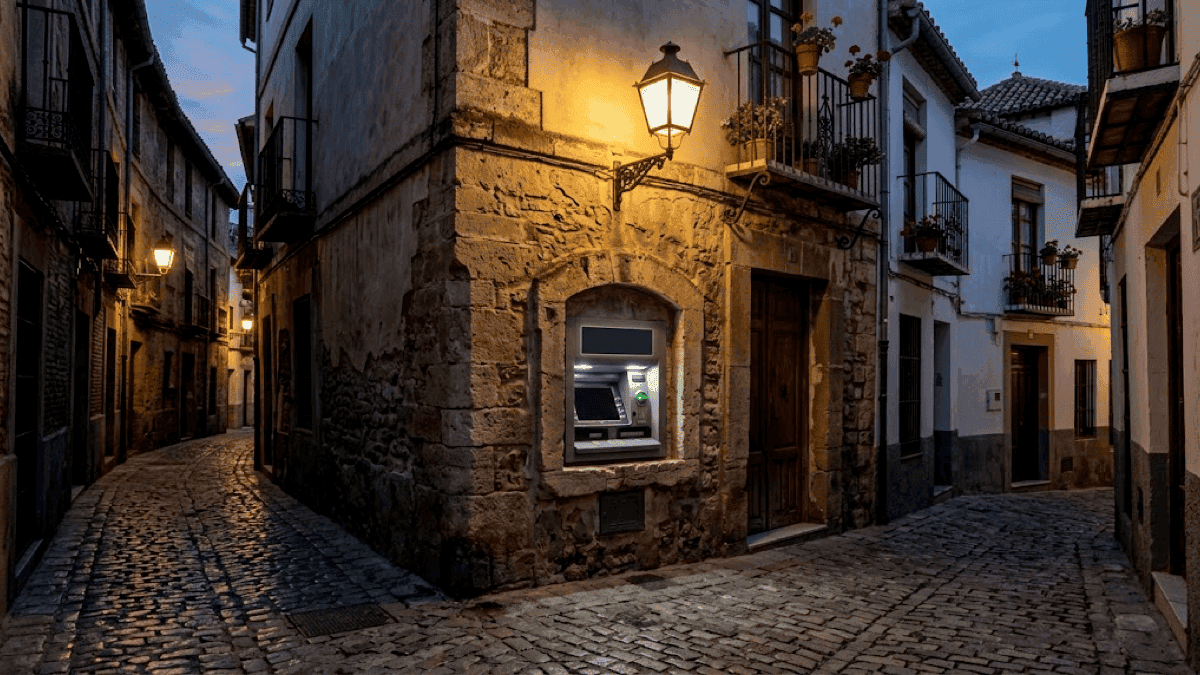
Instead, it’s recommend to use ATMs (AKA cajeros) because they offer the best exchange rates in Europe. You must make sure your bank doesn’t charge ATM fees if you want this to work. If you’re stuck with a bank that has high ATM fees, read about banks that don’t charge withdrawal fees.
Which banks have the lowest withdrawal fees in Spain?
Well the answer certainly isn’t Deutsche bank (unless that’s your bank).
The only two banks I found that don’t charge a fee in Spain are Ibercaja and CajaSur, but with a big caveat (we’ll get to soon). These two are smaller regional banks, so which bank is best for you might depend on where you are.
Ibercaja and Cajasur are the best options because they don’t charge you a flat exchange rate for withdrawing at ATMs like BBVA and Santander do. This means that if you’re not a customer at a Spanish bank, sticking to my top ATM picks will save you money in the long run.
The caveat to no-fee ATMs is that the banks that run are trying to trick you into accepting a dynamic currency conversion. This is a common scam banks use on customers holding a foreign currency or international cards.
You must click “No” and reject the exchange rate offered by the ATM. You’ll still get your money if you press decline and you’ll be charged in USD according to your bank’s current exchange rate.
This is also a perk of using credit cards, which will give you the most current exchange rate when shopping abroad. But if you need cash, try to avoid ATM fees and bad exchange rates at local “Change” shops.