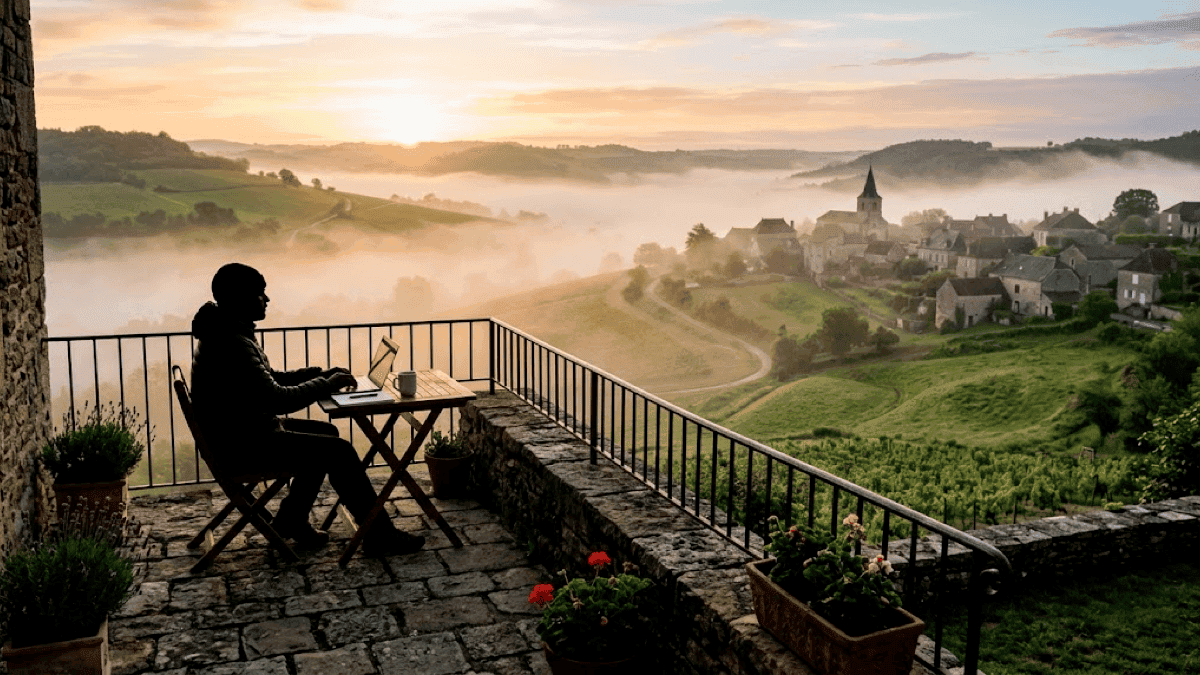
Picture yourself sipping freshly brewed coffee on a sun-dappled terrace overlooking rolling hills, your laptop perched on a rustic wooden table. The only sounds are chirping birds and the occasional rustle of leaves in the breeze. No honking cars, no overcrowded coworking spaces, and no overpriced avocado toast.
This is the life of a digital “slowmad.” For years, digital nomads have flocked to urban hubs like Lisbon, Chiang Mai, and Medellín, drawn by their vibrant communities, reliable infrastructure, and Instagram-worthy cafes. But a growing number of remote workers are ditching the hustle and bustle of city life for the tranquility and authenticity of rural and remote destinations. Why? Let’s dive into the trend, the perks, and the pitfalls of this great escape.
From Urban Centers to Rural Retreats
Since the pandemic redefined remote work, global cities became the go-to for digital nomads. But urban centers have started losing their luster. Rising rents, overcrowding, and the monotony of expat bubbles made cities less appealing. The countryside offers a quieter, cheaper, and more culturally immersive alternative — thus, digital nomad flight commenced.
Take Spain’s Extremadura region, for example. Known for its medieval villages and Roman ruins, this area offers grants of up to €15,000 to remote workers willing to settle in villages with fewer than 5,000 residents. Similarly, Portugal’s Madeira has created a digital nomad village in Ponta do Sol, complete with free coworking spaces and community events. These initiatives are part of a broader trend as governments and local communities recognize the economic and cultural benefits of attracting digital nomads to rural areas
Why Rural Living Is Winning Hearts (and Wallets)
So, what’s the big draw? Why are digital nomads trading their city apartments for countryside cottages? Here are some of the key benefits:
1. Lower Cost of Living
Let’s face it: Cities are expensive. A one-bedroom apartment in Barcelona can set you back €1,500 a month, while a similar setup in Extremadura costs just €500. That’s a lot of extra cash for weekend getaways, local wine, or, you know, saving for retirement.
2. Peace and Productivity
Rural areas offer a level of tranquility that’s hard to find in cities. Without the constant noise and distractions of urban life, many nomads find they’re more productive — and less stressed. Imagine writing your next big pitch with the sound of a babbling brook in the background instead of construction drills.
3. Authentic Cultural Experiences
Urban expat bubbles can feel like a sanitized version of the local culture. In rural areas, you’re more likely to engage with locals and participate in traditional activities, like cork harvesting in Spain or coffee farming in Colombia’s Minca. Programs like Spain’s Rooral initiative even pair nomads with local families for a deeper cultural exchange
4. Access to Nature
Whether it’s hiking in Thailand’s Pai, kayaking on Guatemala’s Lake Atitlán, or exploring the forests of Bulgaria’s Bansko, rural destinations offer unparalleled access to natural beauty. For many nomads, this connection to nature is a welcome antidote to years of city living.
5. Government Incentives
From grants to free coworking spaces, rural areas are rolling out the red carpet for digital nomads. These incentives not only make rural living more affordable but also help integrate nomads into local communities.
The Challenges of Rural Life as a Digital Nomad
Of course, rural living isn’t without its challenges. Before you pack your bags and head for the hills, consider these potential pitfalls:
1. Connectivity Issues
Reliable internet is the lifeblood of remote work, and not all rural areas are up to speed — literally. While some regions are investing in infrastructure (like Cabo Verde’s undersea fiber optic cables), others still struggle with intermittent connectivity. Pro tip: Always check the Wi-Fi situation before committing to a location
2. Limited Amenities
Forget 24/7 grocery stores and Uber Eats. Rural areas often lack the conveniences of city life, which can be a dealbreaker for some nomads. Coworking spaces, cafes with Wi-Fi, and even basic healthcare facilities may be hard to come by.
3. Social Isolation
While rural living offers peace and quiet, it can also be lonely. Unlike urban hubs with established nomad communities, rural areas may lack social opportunities. Building connections with locals takes time and effort, and not everyone is up for the challenge.
4. Cultural and Language Barriers
Integrating into a rural community isn’t always easy. Language barriers and cultural differences can make it difficult to connect with locals, leading to feelings of isolation. In some cases, locals may even resent the influx of nomads, especially if it drives up housing costs or disrupts traditional ways of life
5. Housing Shortages
Speaking of housing, the arrival of digital nomads can strain local markets. In Portugal’s Ponta do Sol, rental prices surged by 20% after the launch of its nomad village, displacing some long-term residents. It’s a delicate balance, and not all communities are equipped to handle the influx.
The Hotspots: Where Are Digital Nomads Going?
Despite the challenges, rural living is gaining traction among digital nomads. Here are some of the most popular destinations for those seeking a slower pace of life:
1. Bansko, Bulgaria
Nestled in the Pirin Mountains, Bansko offers a mix of traditional charm and modern amenities. With coworking spaces, affordable housing, and an annual Nomad Fest, it’s a top choice for remote workers
2. Minca, Colombia
This picturesque village north of Santa Marta is a haven for nature lovers. Known for its coffee plantations and stunning landscapes, Minca is perfect for nomads seeking tranquility and a connection to nature
3. Lake Atitlán, Guatemala
Accessible only by boat, this car-free zone is a digital nomad’s dream. With lakeside villages, Mayan artisans, and organic farms, Lake Atitlán offers a unique blend of culture and natural beauty
4. Pai, Thailand
A quieter alternative to Chiang Mai, Pai is famous for its rice paddies, hot springs, and laid-back vibe. It’s an ideal spot for nomads looking to escape the crowds while staying connected
5. Extremadura, Spain
This under-the-radar region is making waves with its generous grants for remote workers. Add in medieval villages, Roman ruins, and a low cost of living, and you’ve got a recipe for rural bliss
The Verdict: Is Rural Living Right for You?
Rural living isn’t for everyone. It requires a willingness to adapt, a sense of adventure, and a good dose of patience. But for those who crave peace, authenticity, and a deeper connection to the places they call home (even temporarily), it’s an enticing alternative to the urban grind.
As digital nomadism continues to evolve, rural areas are poised to play a bigger role in the lifestyle’s future. With the right balance of infrastructure, community support, and cultural exchange, these destinations could become thriving hubs for remote workers seeking more than just a change of scenery.
Are you ready to trade skyscrapers for starlit skies? The countryside is calling — and it just might be the perfect place to answer.